
About Marcelo Kuchar and the Cyberpsychology Project
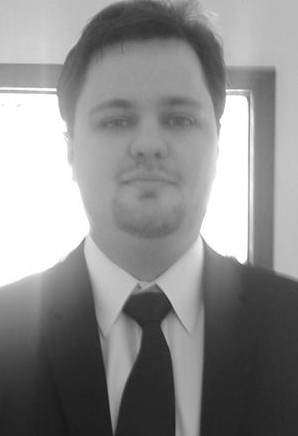
I’m Marcelo Kuchar Matte, a professor at the Federal Institute of Mato Grosso do Sul (IFMS), in Brazil. Cyberpsychology grew out of a question that has followed me for years: what does technology actually do to our minds?
My background started in computing. I hold a degree in Systems Analysis and a master’s in Computer Science, and I research Computer Vision and Artificial Intelligence. Day to day, I work with software development, automation, and data analysis, mostly in Python, Django, and IoT.
Where code meets the mind
Writing software teaches you something uncomfortable: systems are designed to produce behavior. When a feed never ends, that isn’t an accident, it’s a design decision. Understanding why we freeze in front of a screen takes more than code.
That’s why I went back to school. I’m currently also studying Psychology and Philosophy, and that combination is what this site runs on: analyzing how algorithms work, and what they do to attention, sleep, self-image, and mental health.
What you’ll find here
- Cyberpsychology — how interfaces and algorithms shape behavior.
- Neuroscience and technology — what happens in the brain under constant stimulation.
- Digital literacy — practical guidance for parents, teachers, and young people.
How these articles are written
Every article starts from a study published in a peer-reviewed journal. I report the study’s numbers, its sample size, what the authors concluded, and, just as important, what the research does not allow us to claim. The full reference, with DOI, is always at the end of the article, so you can go to the source and disagree with me if you want to.
There are no miracle promises and no “5 tricks to quit your phone” lists here. Just science translated into plain language, with room for doubt.
Important notice
This site is a science communication project. I write based on studies published in peer-reviewed journals. I do not provide psychological care and am not a licensed mental health professional in any jurisdiction. Nothing published here replaces a proper evaluation, diagnosis, or treatment.
If you are experiencing psychological distress, please reach out to a licensed psychologist or psychiatrist in your country. In the United States, you can call or text 988 (Suicide & Crisis Lifeline). In the United Kingdom and Ireland, Samaritans can be reached at 116 123. For other countries, the International Association for Suicide Prevention maintains a directory of crisis centers worldwide.
Contact
Questions, suggestions, corrections, and disagreements are welcome: visit the contact page or write to marcelokuchar@gmail.com.